
Clarence Briggs stood at the edge of his lawn, eyes fixed on the wreckage where his flower bed used to be. The once orderly rows of tulips were now a mangled mess—stems bent and broken, petals scattered like torn ribbon across the grass. Dark tire tracks carved a careless path straight through the middle, cutting the bed in two as if it meant nothing. A sharp breath of cold air filled his lungs, and his chest clenched around it.
This wasn’t just a flower bed to him. It was Helen’s. His late wife had planted those tulips fifteen years ago, her hands in the soil, her laughter carried on the spring breeze. After she passed, Clarence made it his quiet mission to tend to them each year—trimming, watering, guarding them from the frost like they were the last delicate link he had to her. But today, that link had been thoughtlessly trampled.
He didn’t yell. He didn’t shake his fist at the sky or storm down the street looking for whoever was responsible. He simply stood there, broom in hand, staring down at the damage. The ache in his chest wasn’t just from loss. It was from powerlessness. The quiet sense that something sacred had been violated, and there was nothing he could do to rewind the moment.
But as the wind stirred the torn petals and made the crushed leaves tremble, something shifted in him. The sorrow hardened into resolve. He might not be able to fix what had been done, but he could make sure it never happened again.
Clarence tightened his grip on the broom.
This time, he wouldn’t just sweep up the mess. He’d stand guard.
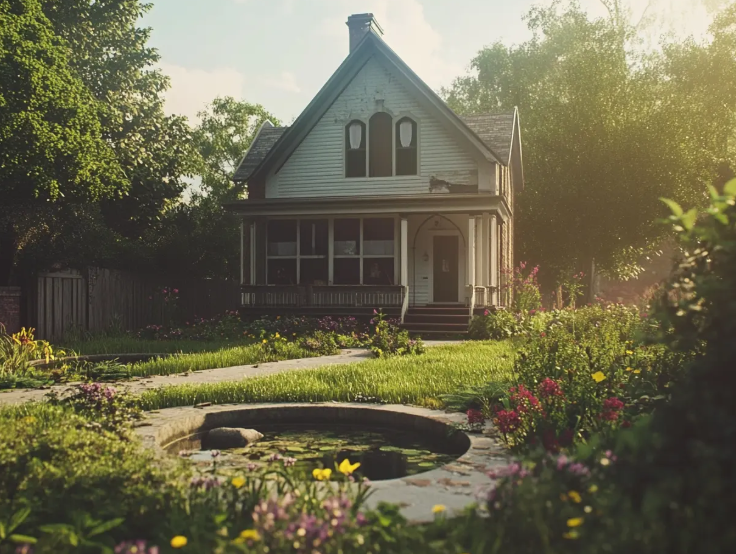
Clarence Briggs had lived in the same house on Ashberry Lane for more than four decades. It stood quietly at the far end of the street, just before the woods began, as if the world ended there in a hush of trees and birdsong. He liked it that way—removed from traffic, from neighbors’ chatter, from change. It was a place where time moved slowly, where things stayed just as they were. And Clarence could breathe there.
When his wife Helen passed eight years ago, the quiet grew heavier, but never unbearable. Silence, to Clarence, wasn’t something to fear—it was something to tend, like a familiar garden. He filled his days with simple, steady comforts. Each morning began with tea sweetened by a touch of honey, followed by the newspaper’s crossword puzzle—always in pen. Then came the yard work, hours of it, slow and methodical. The lawn was clipped to precision, the hedges trimmed like sculpture, the flower beds kept free of weeds and debris.
The yard had become more than a task. It was a ritual. A sanctuary. His pride, in a world that seemed to move too fast beyond the edges of Ashberry Lane.
Every week, Clarence moved across the lawn in slow, deliberate lines, guiding the mower with a quiet focus. He pruned the hedges carefully, one branch at a time, using shears instead of electric clippers. The handwork gave him more control, more precision. It was the kind of work that required patience—and he had plenty of that.