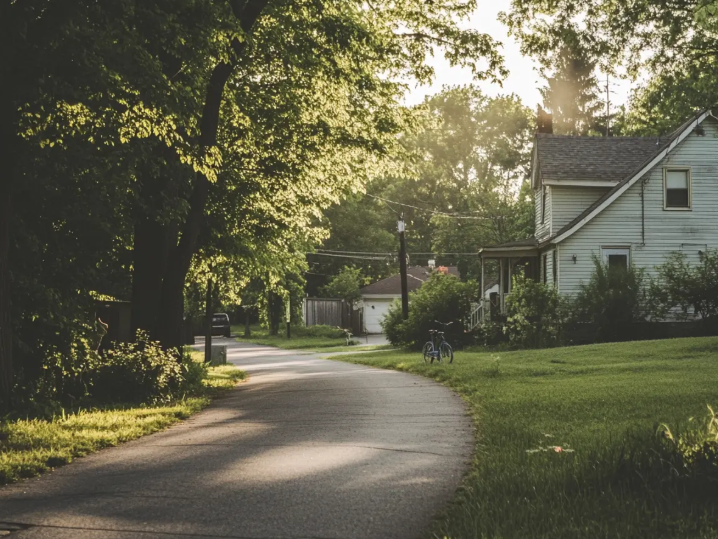
At first, Clarence didn’t mind. He understood people needed their space, too. The world outside moved fast—he just hadn’t expected it to brush so close to his own.
They stayed on the trail, at least in the beginning. Clarence never claimed it as his own—it wasn’t his land—but he couldn’t ignore how the daily rhythm had changed. The once-gentle quiet behind his fence now came with the steady hiss of rubber on dirt. It was subtle at first, like the distant ticking of a clock, but over time, it became constant.
The noise broke the stillness he cherished. His dog, Taffy, once content to nap under the shade of the maple tree, began barking at every flash of movement. The windchimes Helen had hung by the porch, once a soft part of the breeze, were barely audible over the buzz of tires and bursts of conversation.
Still, Clarence didn’t complain. He kept his hands in the soil, kept tending to the marigolds and asters as if nothing had changed. He held tight to his routine like a lifeline. But the cyclists kept coming, more each week, like the trail had turned into a highway just beyond the fence.
The real trouble started when construction closed a section of the official cycling lane two blocks away. Overnight, orange barricades went up. Detour signs appeared. And with that, the trickle of bikers turned into a flood. They cut corners, skipped the main roads, and funneled straight through the trail behind Clarence’s property—no longer content to stay on the path.
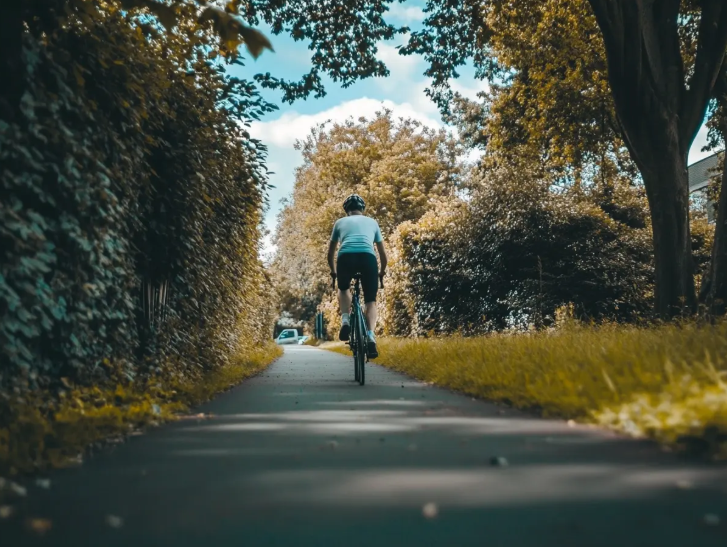
The sign went up overnight—“TEMPORARILY CLOSED – DETOUR AHEAD.” But the detour wasn’t marked clearly, and Clarence soon learned something about cyclists: they hated slowing down. Losing momentum meant more effort, more time, more strain. So, they found their own way forward.
His yard became one of those ways.
At first, it was just one or two riders. Teenagers, probably, or young men in bright jerseys who moved like wind. They cut the corner of his lawn with such speed and precision it almost seemed graceful—almost. Clarence spotted them from his kitchen window, spoon frozen halfway to his mouth. He blinked, not quite believing what he’d seen.
They darted through the grass like it was open road. No pause. No glance back. Just a blur of motion across the very edge of what he’d worked so hard to maintain. It wasn’t the deepest part of the yard, just a sliver. But it was his.
And they rode through it like it was nothing.
Clarence gave them the benefit of the doubt. Maybe they didn’t realize. Maybe they thought the yard was part of the trail, or just another patch of open green. So he took a quiet step toward resolution.
He typed out a sign in large, clear letters: “Private Yard – Please Use Road.” It was polite, firm without being harsh. He laminated it carefully to weatherproof it, mounted it on a metal stake, and placed it by the back fence—visible but not aggressive. A gentle reminder, not a warning.
By morning, it was gone.