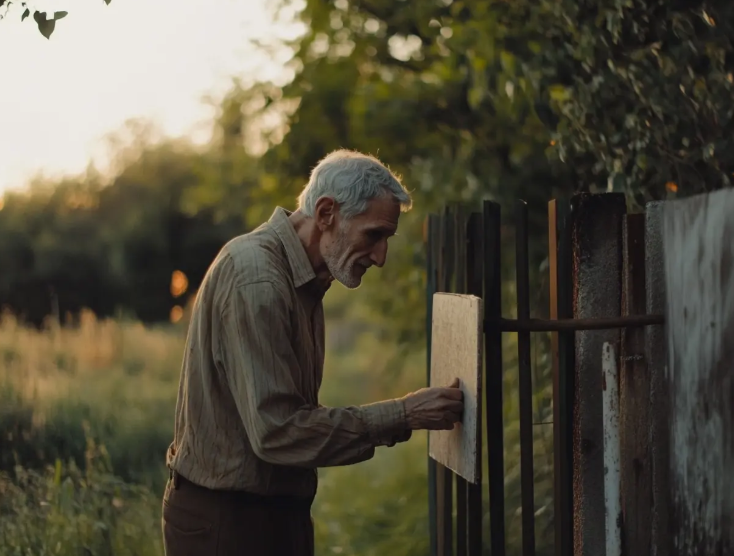
He found it crumpled in the bushes, bent sharply in the middle like a discarded flyer. No note, no apology—just tossed aside. And as he stood there holding the sign, the soft crackle of tires on grass reached his ears again.
Three cyclists zipped through in quick succession, as if choreographed. The last one swerved so close to the rose border that Clarence watched a burst of petals fly up behind the rear wheel—bright red confetti caught in the air.
He stepped out onto the back steps, unable to speak, the sign still in his hand. His yard wasn’t just being ignored—it was being dismissed. And for the first time in years, Clarence felt truly stunned. Not by the act itself, but by how easy it had become for others to overlook what mattered to him.
Taffy barked until her voice cracked, tail stiff, eyes locked on the fence line. She’d taken to standing guard near the flower beds, hackles raised at every shadow that darted past. Clarence knew she felt it too—the disruption, the disrespect. But he still wanted to believe people could be reasoned with.
That afternoon, he spotted a cyclist slowing near the back gate. It was his chance. Clarence stepped out, raised a hand in calm warning.
“This is private property,” he said, keeping his tone steady, almost gentle. “Would appreciate it if you’d stick to the trail.”
The rider blinked, clearly surprised, and tugged out one earbud. “Oh—sorry. Just going around the construction. Won’t happen again.”
Clarence gave a small nod and watched him ride off, hoping the message had landed.
But the very next morning, there he was again—same neon windbreaker, same smooth cut across the middle of the lawn. The tires left faint impressions across the grass, the same grass Clarence had mowed just days before.
This time, Clarence didn’t step outside.
He just stood by the window, lips pressed thin, watching the rider disappear down the trail like nothing had happened.
Not even a glance toward the porch.
Clarence felt a flicker deep in his stomach—something uneasy, not quite anger yet, but edging closer with every passing moment. The disrespect wasn’t just in the shortcuts through his yard; it was in the indifference, the disregard.
Over the next few days, Clarence tried reaching out.
He called after a woman on a sleek racing bike, mid-sentence: “Please use the road.” She barely hesitated, pedaling past as if he were invisible.
A teenager gave a vague nod but didn’t slow his pace.
One man, face tight with impatience, sneered as he sped by: “Get out of the way, old man.”
Clarence stood rooted, the words hanging in the air. The world beyond his fence was moving too fast, too loud. And his quiet plea was swallowed up by the rush.
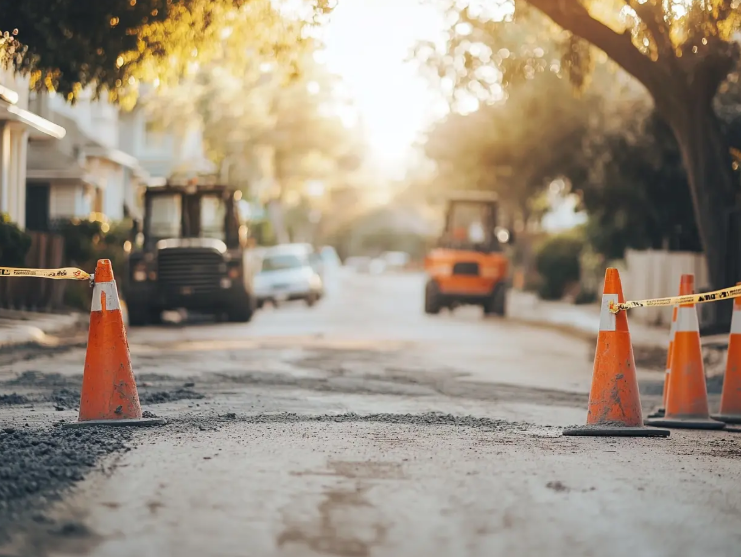
The tire tracks grew bolder with each passing day. No longer did the cyclists curve gently along the edges of the yard—they cut straight through the center, carving clean, confident lines into the grass. It was clear now: this wasn’t accidental or occasional. It had become routine.
Every morning, Clarence stepped outside to new signs of disturbance. Mulch pushed aside like forgotten debris. Delicate flower stems snapped under careless wheels. One morning, a solar garden light lay shattered, split clean in two.